
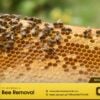


Where the bees were
This honey bee colony had built its hive along the roofline of a two-story home.
What we found
The comb hung under the eave, high above the ground, with bees covering it.

How we removed them
Because the hive was two stories up, we needed a lift to reach it safely and take it out.
Why Bees Build Along Rooflines
Eaves, soffits and roof edges are sheltered from rain and sun, and in South Florida many homes have soffit vents, loose fascia boards or the open ends of barrel tiles along the roofline. Any of these can give a scout bee a protected place to start a colony. Some colonies build comb out in the open under the eave, like this one. Others move into the soffit or the space under the roof tiles, where you’ll only see bees going in and out of a gap.
What Happens After a Roofline Hive Comes Out
Removing the bees is only part of the job. Every piece of comb has to come off, because leftover wax and honey attract new swarms to the same spot. Then we clean the area and seal any gaps the bees were using. If you see bees gathering under your eave, keep people and pets back and don’t spray them, especially on a second story where a ladder makes things more dangerous.
Roofline and eave hives are common in South Florida. See two bee hives in one home and bees inside a soffit for similar jobs.
Learn more about our bee hive removal service.
Have bees in a similar spot? Call Miami Bee Removal at 786-554-0245 for a free estimate. We serve Miami-Dade, Broward and Palm Beach counties.
 786-554-0245