


Bee Control and Bee Removal in Miami and South Florida
When honey bees start gathering around your roof, wall, or water meter, you may wonder whether they’re passing through or settling in. Watching where they go can help you tell the difference. Bee control starts with identifying the insect, finding where the bees are gathering, and determining whether there’s an established colony. For homeowners and property managers in Miami and across South Florida, those details help determine what kind of bee removal the property needs.
How to Tell if Bees Have Moved In
A cluster hanging from a tree branch, fence, or outdoor fixture may be a honey bee swarm. Swarms form when a group of bees leaves an existing colony with a queen to look for a new home. You might see a tight cluster resting in the open while scout bees search for a sheltered space. A swarm can move on, but it can also settle nearby.
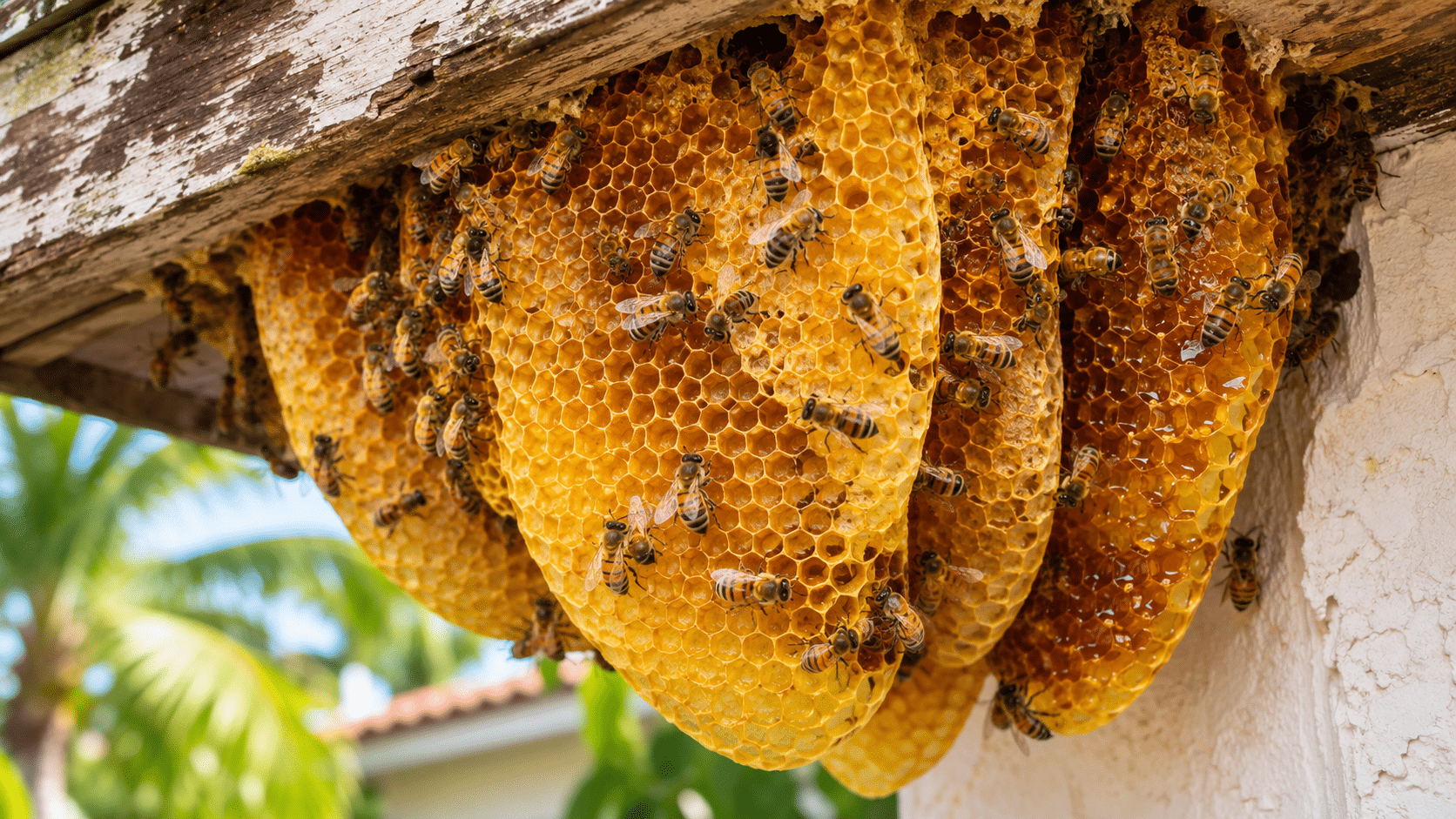
If you see bees repeatedly entering and leaving the same opening under a roof tile, through a soffit gap, or along a wall seam, there may be a colony inside. You might also notice bees arriving with pollen on their back legs. The same entrance can look quiet at certain times of day, so it helps to describe when you’ve seen the most activity and how long it’s been happening.
What Professional Bee Control Includes
A bee control inspection can help confirm whether you’re dealing with honey bees or another insect, such as paper wasps. The technician looks for entry points and assesses where the colony may be located, how it can be reached, and what the work will involve. A cluster on a low branch is easier to access than a colony behind a second-story soffit or beneath roof tiles.
For an established colony, the technician checks whether the comb can be reached and removed. During a structural bee removal, reaching the comb may require opening a section of the soffit, wall, or roof. Ask what the estimate covers, including access, honeycomb removal, sealing, and any patching or repairs. For a business or condominium, let the technician know if the entrance is near a walkway, a shared courtyard, or another busy area.
When Live Bee Removal Is an Option
Live bee removal may be possible when the bees and their comb are accessible. A technician may use a bee-safe vacuum to collect honey bees for relocation. An exposed swarm often offers more direct access than a colony established inside a building. The location and condition of the colony help determine whether live removal is practical.
Even if you want the bees relocated, give the technician room to assess the site. Keep people and pets away from the area, and avoid spraying the bees, disturbing the cluster, or plugging an active entrance. If the bees are going into a wall or roof, note the opening and share a photo or short video taken from a safe distance.
Why Honeycomb Removal and Bee Proofing Matter
Removing an established colony can involve taking out honeycomb, stored honey, and brood. Comb left inside a structure can attract other pests, and stored honey may leak into surrounding materials. If the bees are behind a finished wall or under the roof, ask how the technician will locate the comb and what access is needed to remove it.
Once the colony is removed and the work area is ready, sealing suitable gaps can reduce the chance that bees return to the same space. Bee proofing may involve addressing openings around soffits, siding, or utility penetrations while keeping necessary ventilation clear. It’s worth checking other gaps nearby, since the opening you first noticed may be one of several access points.
Schedule Bee Control in Miami and South Florida
When contacting Miami Bee Removal Corp, share your location, where the bees are gathering, how high they are, and whether they’re entering a structure. Mention if you’ve had bee activity in the same spot before. Photos can help explain the situation, especially when the entrance is above eye level or on a part of the building that is hard to describe.
Whether you’re dealing with a honey bee swarm in the yard or a colony inside the roof, a bee control inspection can help you understand your bee removal options and what the job may cost.
 786-554-0245