Found a bee hive in your wall, roof or tree? Our licensed and insured team handles bee hive removal for homes and businesses serving Miami-Dade, Broward and Palm Beach counties. We remove the bees, the honeycomb and the honey, so the hive doesn’t come back. Live relocation is always our first choice. Call 786-554-0245 for a free estimate. Hablamos Español.
Why a Bee Hive Needs Full Bee Hive Removal, Not Just the Bees
A honey bee colony isn’t just a cluster of bees. Once bees settle into a space, they build sheets of wax honeycomb and fill them with honey, pollen and young bees. A healthy colony can keep growing for months or years inside a wall or roof.
If only the bees are taken and the comb stays behind, three problems follow:
Honey can leak. Without bees to cool the hive, wax softens in the Miami heat and honey can seep through drywall, ceilings and stucco.
Other pests move in. Leftover comb attracts ants, roaches and wax moths.
New bees return. The scent of an old hive tells passing swarms that the spot is a good home. That’s why the same wall can get bees again and again.
Complete bee hive removal means taking out the colony, the comb and the honey, then cleaning and sealing the space.
Where We Find Bee Hives in South Florida
Honey bees look for dry, protected cavities. In South Florida we regularly do bee hive removal from:
Water meters and cable boxes, which are a common surprise for homeowners and utility workers
Sheds, grills, flower pots, light fixtures and other small spaces
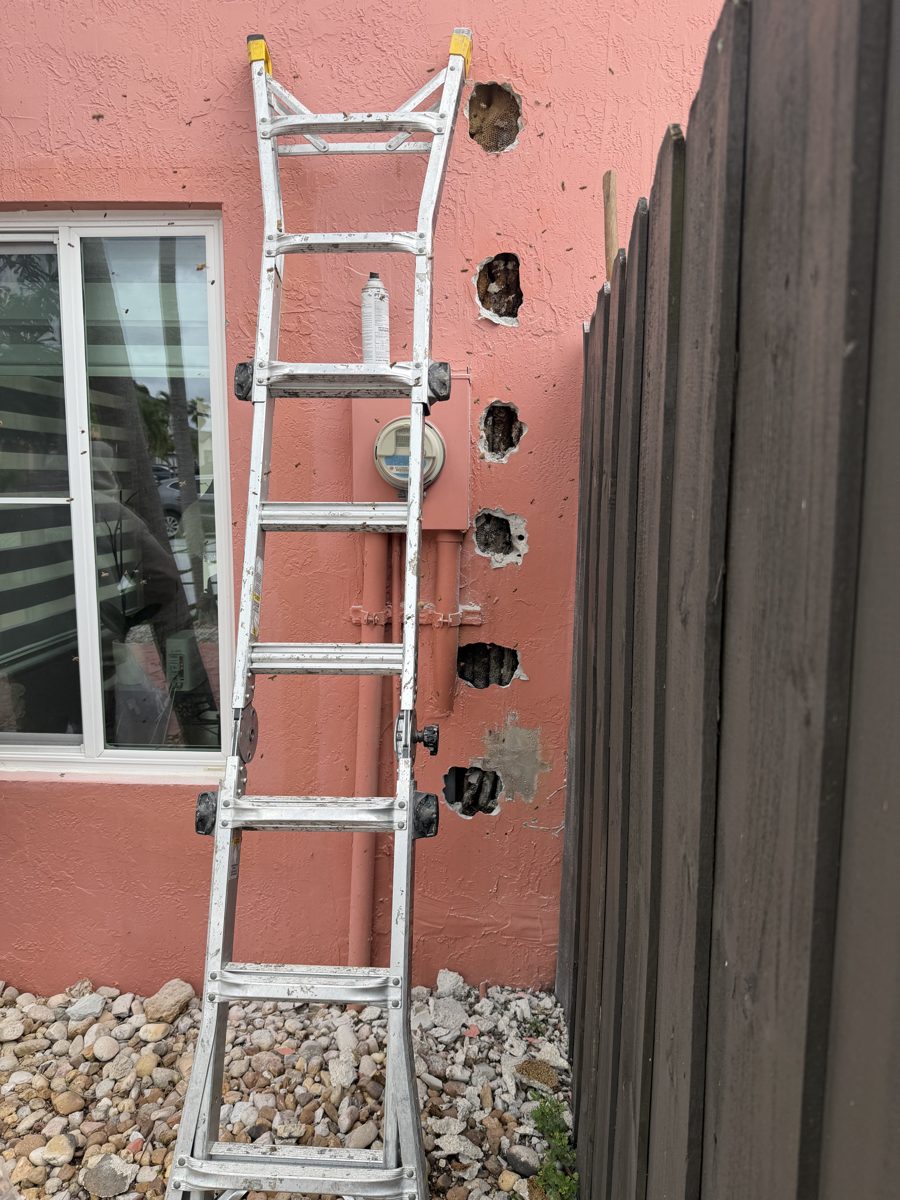
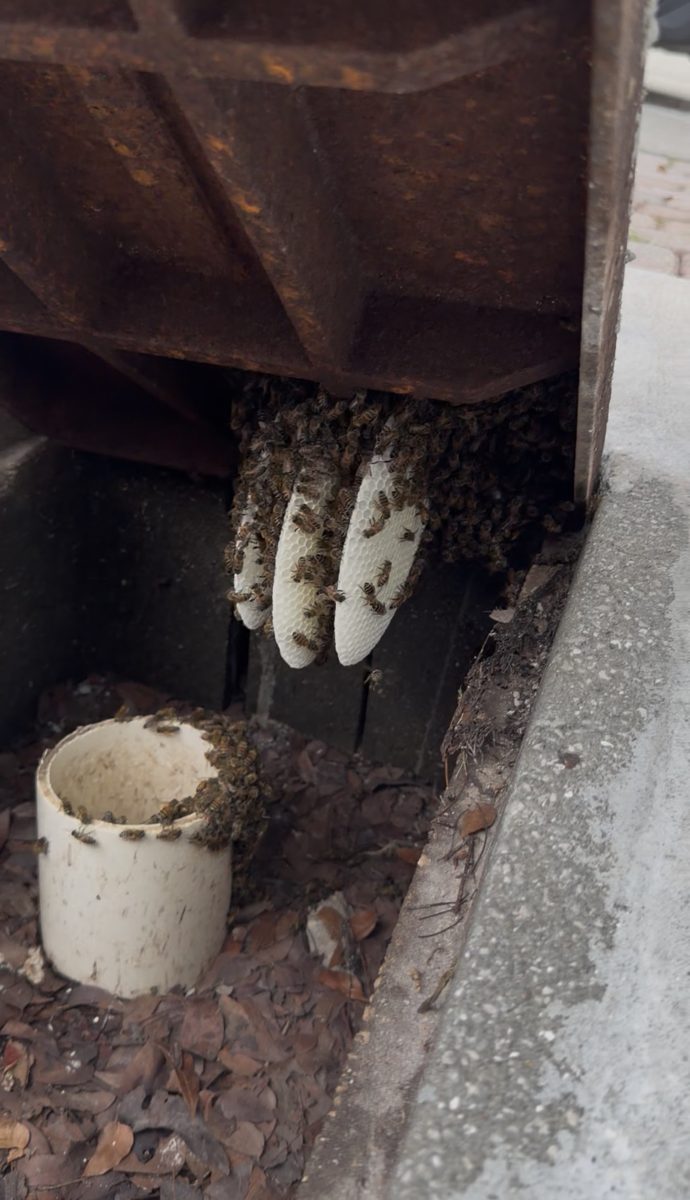
Honeycomb found inside an exterior wall before removal.A live hive built inside an underground water meter box.
Live Bee Hive Removal vs. Bee Extermination
We believe honey bees are worth saving. Whenever we can, we remove the colony alive and relocate it, comb and all, instead of killing it. Live relocation is what we recommend for most jobs.
We also offer bee extermination, and we’re honest about when it makes sense. Bee extermination is used when relocation isn’t possible, for example:
The hive is in a spot that can’t be safely opened, such as deep inside a structure.
The colony is very defensive and puts people or pets at real risk.
The bees have already been sprayed with pesticide, so the colony can’t be safely relocated.
Even after bee extermination, the honeycomb still needs to come out. Dead bees and leftover honey cause the same leaks, odors and repeat swarms described above. We’ll walk you through both options on site so you can choose with full information.
What to Expect During Bee Hive Removal
You call us. Tell us where the bees are going in and out, how long you’ve noticed them, and whether anyone has been stung. We’ll set up a free estimate.
Inspection. We find the entrance and locate the hive.
A clear plan. We explain whether live relocation or bee extermination fits your situation, what we’ll need to open, and how we’ll close it up.
Opening the space. For walls, soffits and roofs, we carefully cut out just enough material to reach the comb.
Removing the colony and comb. We gently collect the bees, then cut out every piece of honeycomb. With live bee hive removal, the comb and bees are placed in a hive box for relocation.
Cleanup and sealing. We clean away honey residue and close the entry points so new bees aren’t drawn back to the same spot.
Your 100-day guarantee. Our work is backed by a 100-day guarantee. If bees return to the treated area during that time, call us.
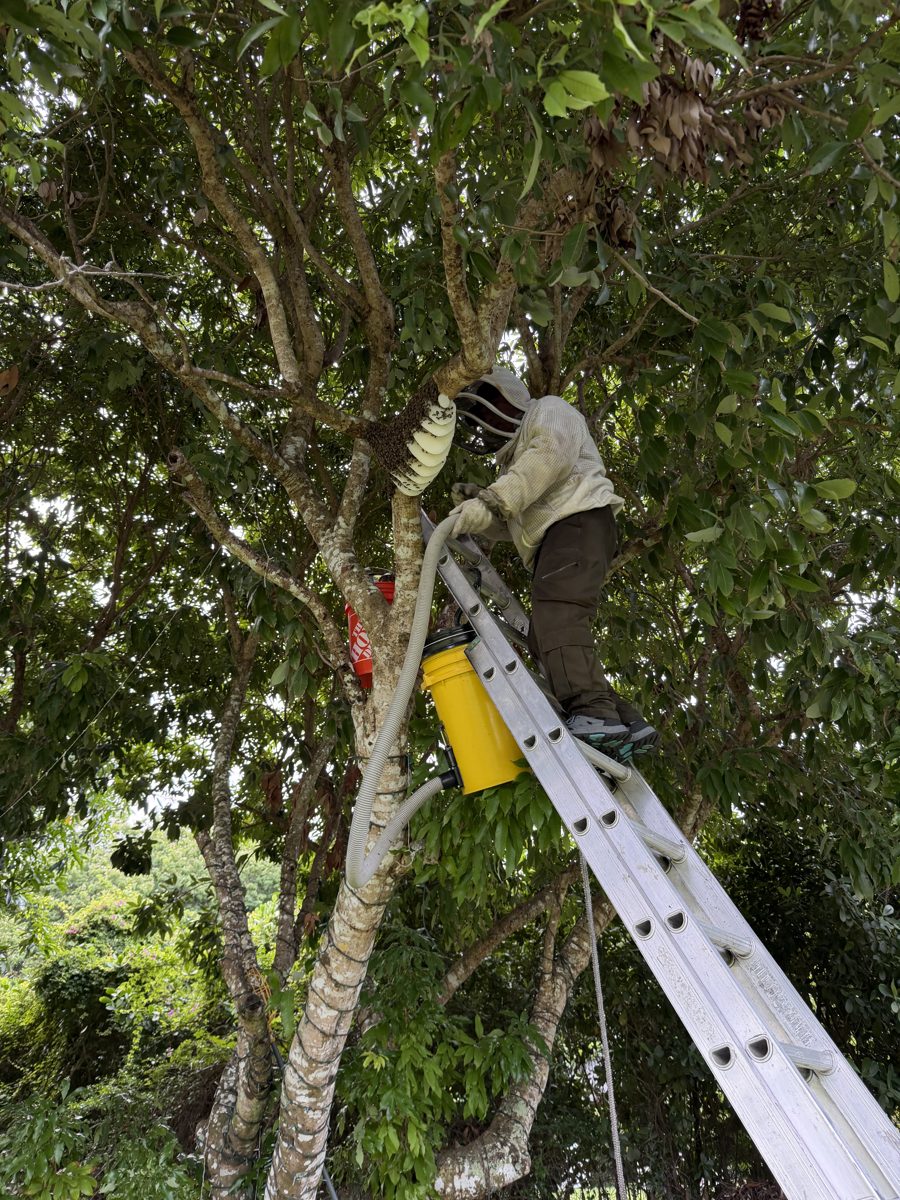
Our technician safely removing a live hive from a tree.
A Calm Word About Africanized Bees in South Florida
Africanized honey bees are established in South Florida, and they look just like regular honey bees. Most colonies we see are not aggressive when left alone. But any colony can defend its hive if it’s disturbed, and Africanized colonies react faster and in greater numbers.
Please keep these simple rules in mind until we arrive:
Don’t spray, hit, plug or block the entrance. That can make the bees defensive or push them deeper into your home.
Avoid running lawn mowers, string trimmers or pressure washers near the hive.
Keep children and pets away from the area.
If bees start chasing you, cover your face, run in a straight line and get inside a building or car. Don’t jump into water.
Bee Hive Removal Across Miami-Dade, Broward and Palm Beach
We serve homeowners, property managers and businesses throughout South Florida, including Kendall, Doral and neighborhoods across all three counties. See our full service areas, or read about bee removal in Kendall and bee removal in Doral.
Bee Hive Removal FAQs
How do I know if I have a bee hive or just a few bees?
Watch the spot for 10 to 15 minutes. If you see a steady stream of bees flying in and out of one small opening, there’s almost certainly a hive inside. A few bees on flowers are just foraging.
Can I remove a bee hive myself?
We don’t recommend it. Spraying or sealing the entrance often kills only some of the bees, leaves the honeycomb behind and can drive bees into your living space. In South Florida, there’s also the risk of disturbing an Africanized colony.
Do you remove the honeycomb too?
Yes. Removing the honeycomb is part of every complete bee hive removal. Leaving it behind leads to honey leaks, pests and new swarms.
Do you kill the bees?
Not if we can help it. Live relocation is our first choice. We offer bee extermination only when relocation isn’t possible, and we’ll explain why before any work begins.
Will you have to cut into my wall or roof?
Often, yes. To get the comb out, we usually need to open the area where the bees built it. We keep openings as small as we can and close up the entry points when we’re done.
Do you offer a guarantee?
Yes. Our bee hive removal work comes with a 100-day guarantee on the treated area.
Do you speak Spanish?
Yes. Hablamos Español.
Get Your Free Bee Hive Removal Estimate
Don’t wait for a small hive to become a big one. Call 786-554-0245 or send us a message for a free estimate. We’re licensed and insured, and we’re serving Miami-Dade, Broward and Palm Beach counties. Hablamos Español.
Related services: live honey bee removal and bee swarm removal.



 786-554-0245