
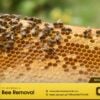


Live Bee Removal and Bee Hive Removal in Kendall, FL
Most of our Kendall bee removal calls come from homeowners. Kendall is a largely residential part of southwest Miami-Dade, and its block homes, townhome rows, mature shade trees and irrigated yards give honey bees plenty of places to settle. We have removed hives from Kendall walls, water meters, drains and even an old wooden box, and we handle live bee removal, bee hive removal and bee extermination for Kendall and all of Miami-Dade.
If you see bees going in and out of one spot on your house, call 786-554-0245. Bee removal estimates are free.
Where we do bee removal around Kendall
"Kendall" covers a lot of ground. We work throughout the Kendall area, including the neighborhoods along Kendall Drive and around Dadeland, and the nearby communities people usually group with it: Kendall West, Kendale Lakes, The Hammocks, The Crossings and Three Lakes. Housing varies across the area, and that changes where bees move in:
- Older single-family streets closer to Dadeland and US-1 have larger lots, big ficus and oak canopies, and older roofs and soffits where small gaps open up over time.
- Townhome and villa communities in areas like Kendale Lakes and The Hammocks share walls and rooflines, so a colony in one unit's wall or soffit can sit right next to a neighbor's.
Why honey bees move into Kendall homes
Most Kendall houses are concrete-block construction with stucco, often finished with a tile or barrel-tile roof. Block walls have hollow cores, and barrel tiles leave curved openings at the eaves. A scout bee only needs a gap about the width of a pencil to find a dry cavity. The spots we check first on a Kendall property are:
- Soffits and fascia, especially where vented soffit panels have pulled loose
- The open ends of barrel tiles along the roof edge
- Gaps around AC line sets, dryer vents, pipes and exterior light fixtures
- Water meter boxes and irrigation valve boxes in the front yard or swale
- Hollow palm trunks, dense ficus hedges, sheds and anything stored outdoors
Do not plug the hole or spray inside it. Trapped bees look for another way out, sometimes into the house, and the honeycomb stays behind in the wall.
Swarm season around Kendall homes
University of Florida experts list March through July as the main swarming season in Florida. That is when you are most likely to see a cluster of bees hanging from a palm frond, fence, mailbox or eave. A swarm is a colony in transit, and it often moves on once its scouts find a cavity. If that cavity is your wall, roof or water meter, it becomes a bee hive removal job. Because South Florida stays warm, bees can move in during any month, so it pays to check your home a few times a year. If a swarm is resting in your yard, see our bee swarm removal page for what to do while you wait.
Live honey bee removal and relocation
Whenever it is practical, we keep the bees alive. For live honey bee removal, we open the cavity, cut out the comb and collect the bees with a low-suction bee vacuum built to move them without harming them. The colony, comb and bees are then relocated away from your home. Live bee removal works best when we can reach the whole hive, which is common in Kendall water meter boxes, sheds and accessible soffits.
Bee hive removal from walls and roofs, and repair afterward
When honey bees have been inside a Kendall wall or roof for a while, they leave behind honeycomb, honey and wax. Leaving comb in place can attract new bees and other pests, and melting honey can stain stucco and drywall in our summer heat. Full bee hive removal means opening the wall, soffit or roof section at the hive, taking out all of the comb, cleaning the cavity and sealing the entry so bees cannot move back in. We explain what we plan to open before we start. We also handle structural repair after bee hive removal, closing up block, stucco, drywall or soffit so the area is sealed and finished.
When bee extermination is the safer choice
Live bee removal is not always safe. A colony behaving defensively near a pool deck, school bus stop or shared townhome wall, or a hive in a spot we cannot reach without serious damage, may call for bee extermination instead. If that is the case, we will explain why and talk it through with you first. Even after bee extermination, the comb still needs to come out, so we follow it with bee hive removal and sealing.
Recent bee removal jobs in Kendall
- Bee removal from inside a wall: a hive behind a Kendall home's air conditioning unit, removed by opening the wall
- Bee removal from a water meter: a colony in a utility box, with the entry sealed afterward
- Bees inside a drain: bees building a hive in a terrace water drain
- Kendall bee removal from a box: a wild hive inside an old wooden box, relocated alive
Kendall Bee Removal FAQ
Do you do bee removal in Kendall?
Yes. We do bee removal throughout Kendall, including Kendall West, Kendale Lakes, The Hammocks and the Dadeland area, and we serve all of Miami-Dade, Broward and Palm Beach counties. See the Kendall jobs above, from a wall behind an AC unit to a terrace drain.
Can you keep the bees alive?
Whenever it is practical, yes. We remove the bees and the comb with a bee vacuum and relocate the colony. If live bee removal is not possible, we will explain why and talk through bee extermination with you first.
Will you have to open my wall or roof?
Sometimes. When a hive is inside a block wall, soffit or tile roof, the comb has to come out, and that can mean opening the area at the hive. We explain what we plan to open before we start, and we can do the repair after bee hive removal.
There are bees in my water meter box. What should I do?
Keep people and pets away, do not open the lid or spray inside it, and call us. Water meter boxes are one of the most common places we find honey bees in Kendall yards.
More bee removal near Kendall
- Bee removal in Miami
- Bee removal in Miami-Dade County
- Doral bee removal
- Bee removal near me: what to do first
- All bee removal service areas
Miami Bee Removal, serving Kendall and all of Miami-Dade, plus Broward and Palm Beach counties. Call 786-554-0245.
 786-554-0245