


- Will Arcas
- 0 Comments
Honey bees are some of the most useful insects in South Florida. They pollinate fruit trees, gardens and flowers, and a healthy colony is a sign of a healthy neighborhood. Most of the time, bees and people get along fine. Problems start when a colony moves into a house, or when someone panics and sprays a swarm. These honey bee tips come from what we see on real jobs, and they’ll help you understand what you’re looking at and keep your family safe.
Tip 1: Learn the Difference Between a Swarm and a Hive
A swarm is a ball of bees hanging in the open, on a branch, fence, eave or car mirror. It’s a colony on the move, resting while scouts look for a new home. Swarms have no comb or young to protect, so they’re usually calm, and many leave within hours or a few days.
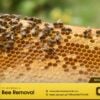
A hive (or colony) is bees that have moved into a space and built wax comb. You’ll see a steady line of bees flying in and out of one opening, such as a gap in a wall, soffit, roof tile or water meter box. A hive won’t leave on its own, and it keeps growing.
Knowing which one you have tells you what to expect. You can read more about swarms on our bee swarm removal page.
Tip 2: Know the Signs of Bees Inside Your Walls
- Bees going in and out of the same small gap, day after day
- A humming sound behind a wall or ceiling, often loudest in the evening
- Bees showing up indoors near light fixtures, vents or outlets
- Dark stains or sticky spots on a ceiling or wall, which can be honey leaking from comb
A colony inside a structure needs the bees and the comb taken out together. Here’s how bee hive removal works when the hive is hidden in a wall, roof or soffit.
Tip 3: Never Spray, Plug or Knock Down Bees
It’s the most common mistake we see. Spraying a colony provokes the bees, rarely reaches the comb inside the wall, and makes it impossible to save the colony. Plugging the entrance is just as risky: trapped bees often push deeper into the wall or find a way into the living space. Knocking down a swarm puts thousands of bees in the air at once.
Spraying also leaves the comb behind. Without bees to cool it, wax softens in South Florida heat and honey can leak through drywall and stucco, and the old comb draws new swarms back to the same spot.
Tip 4: Bees Can Often Be Saved
Many homeowners don’t know that honey bees can be removed alive. With a low-suction bee vacuum, careful comb removal and a hive box, a whole colony can be relocated instead of killed. That’s better for the bees and better for your home, because no dying colony is left inside your wall. Learn how honey bee removal works when the goal is to keep the colony alive.
Live removal isn’t always possible. If a colony has already been sprayed, is extremely defensive near people, or sits somewhere that can’t be opened safely, a bee exterminator may be the safer choice. Even then, the comb and honey still need to come out.
Tip 5: Give Every Colony Respect in South Florida
Africanized honey bees are established in South Florida, and you can’t tell them apart from other honey bees by looking. That’s not a reason to panic, but it is a reason to keep your distance from every colony and swarm.
- Keep children and pets away from bees.
- Don’t run mowers, string trimmers or pressure washers near a colony.
- If bees chase you, cover your face, run in a straight line and get inside a building or car. Don’t jump into water.
- If someone has been stung many times or shows signs of an allergic reaction, call 911.
Read our guide to Africanized bees in Florida for the facts.
Tip 6: Make Your Home Less Inviting to Bees
Scout bees look for dry, protected cavities. You can make those harder to find:
- Seal gaps in soffits, fascia, stucco cracks and around pipes and wires that enter the house.
- Keep water meter and irrigation box lids closed and intact.
- Store empty pots, boxes, grills and old equipment upside down or indoors.
- Check your property now and then for bees going in and out of the same spot. The earlier a colony is found, the smaller the job.
If a colony was removed from your home before, make sure the old comb came out and the entry point was sealed. Leftover comb scent is one of the main reasons bees return to the same wall.
Tip 7: Know What to Ask a Bee Removal Company
- Will you try to remove the bees alive?
- Do you remove the honeycomb and honey, not just the bees?
- Will you repair the area you open and seal the entry point?
- Is the work covered by a warranty?
For a walk-through of a typical job, see our step-by-step guide to how bee removal works, or our bee removal near me checklist.
Have bees on your property? Miami Bee Removal is serving Miami-Dade, Broward and Palm Beach counties. Call 786-554-0245 for a free estimate. Our work comes with a 100-day warranty. Hablamos Español.
 786-554-0245